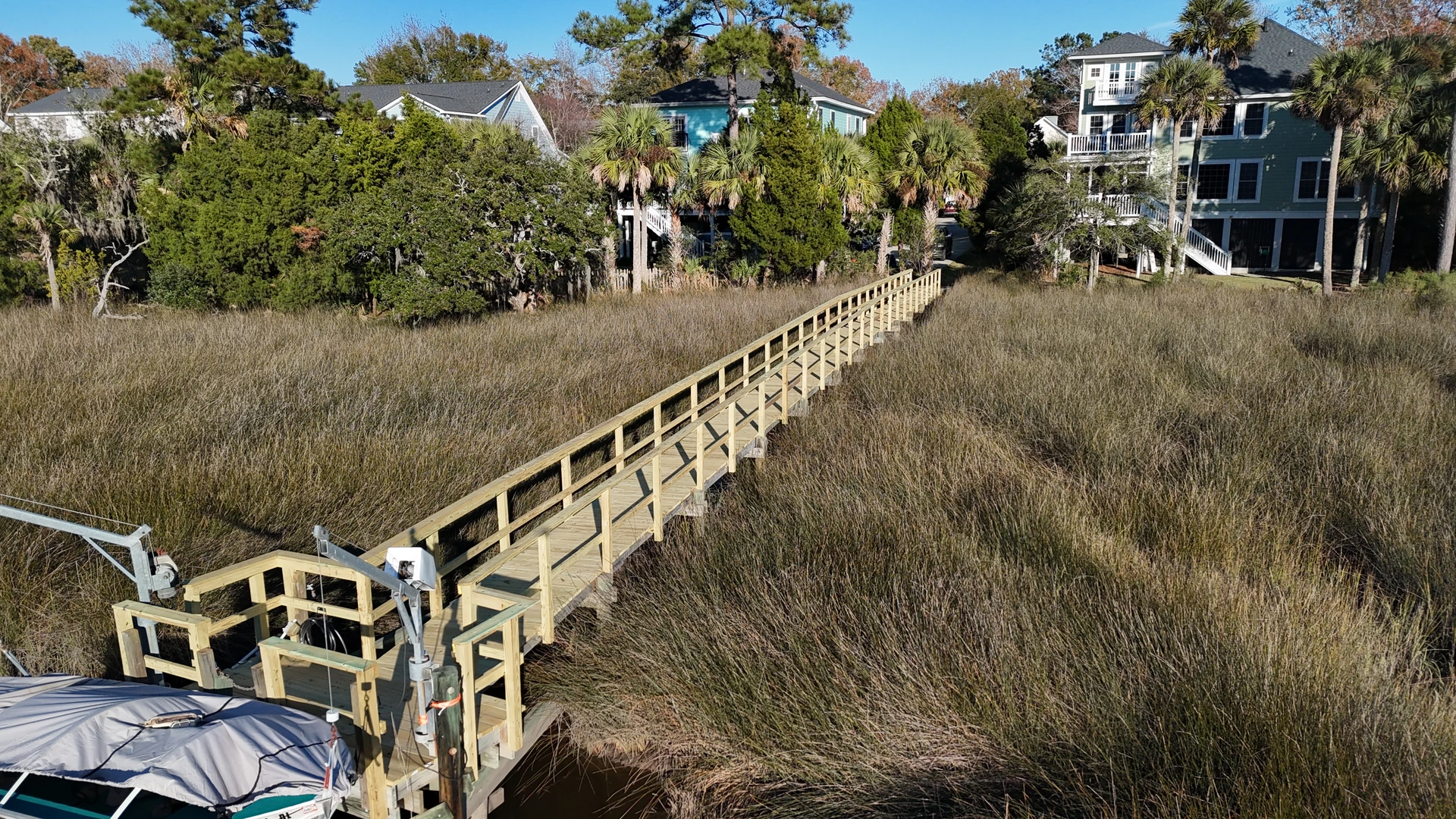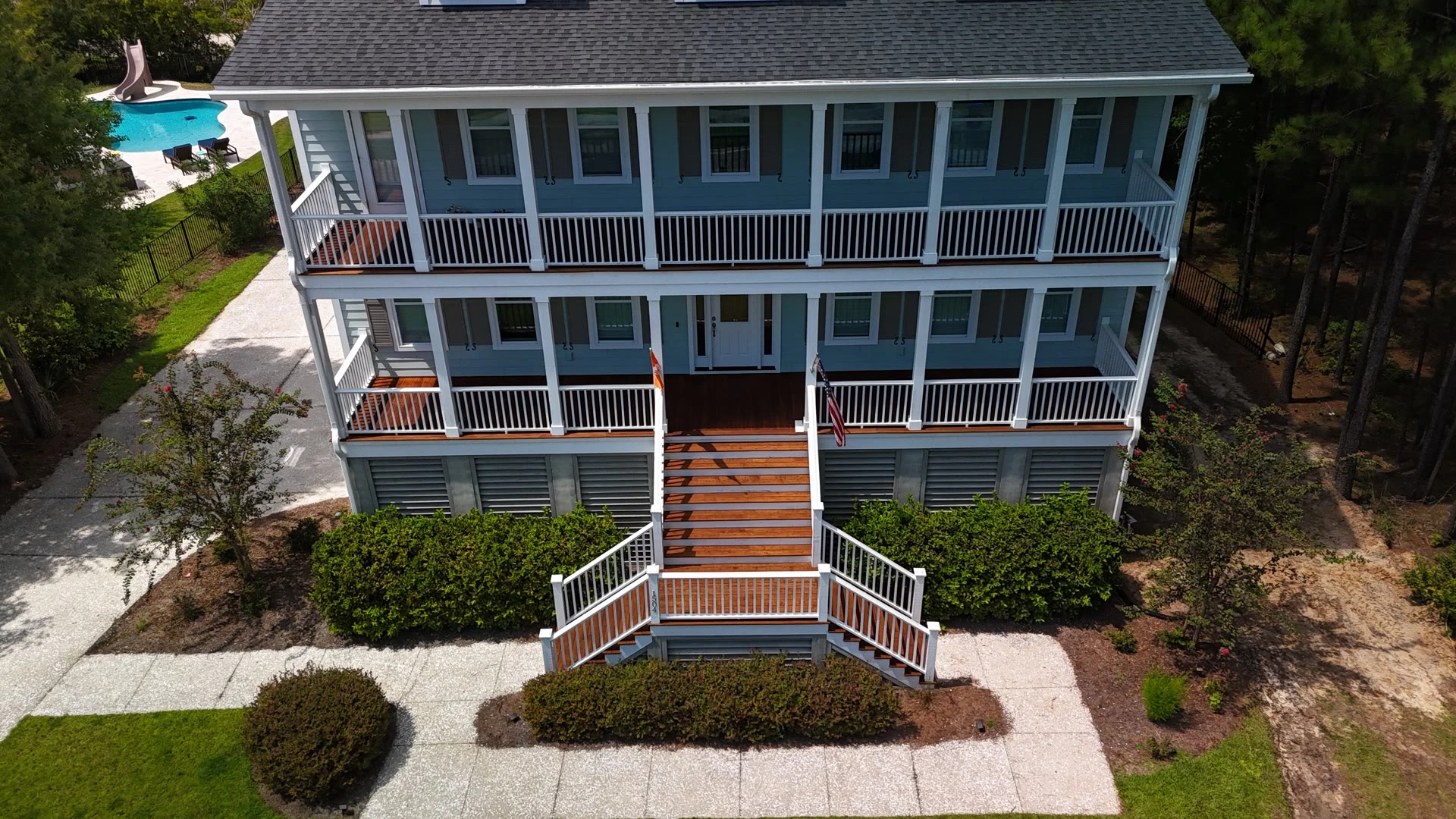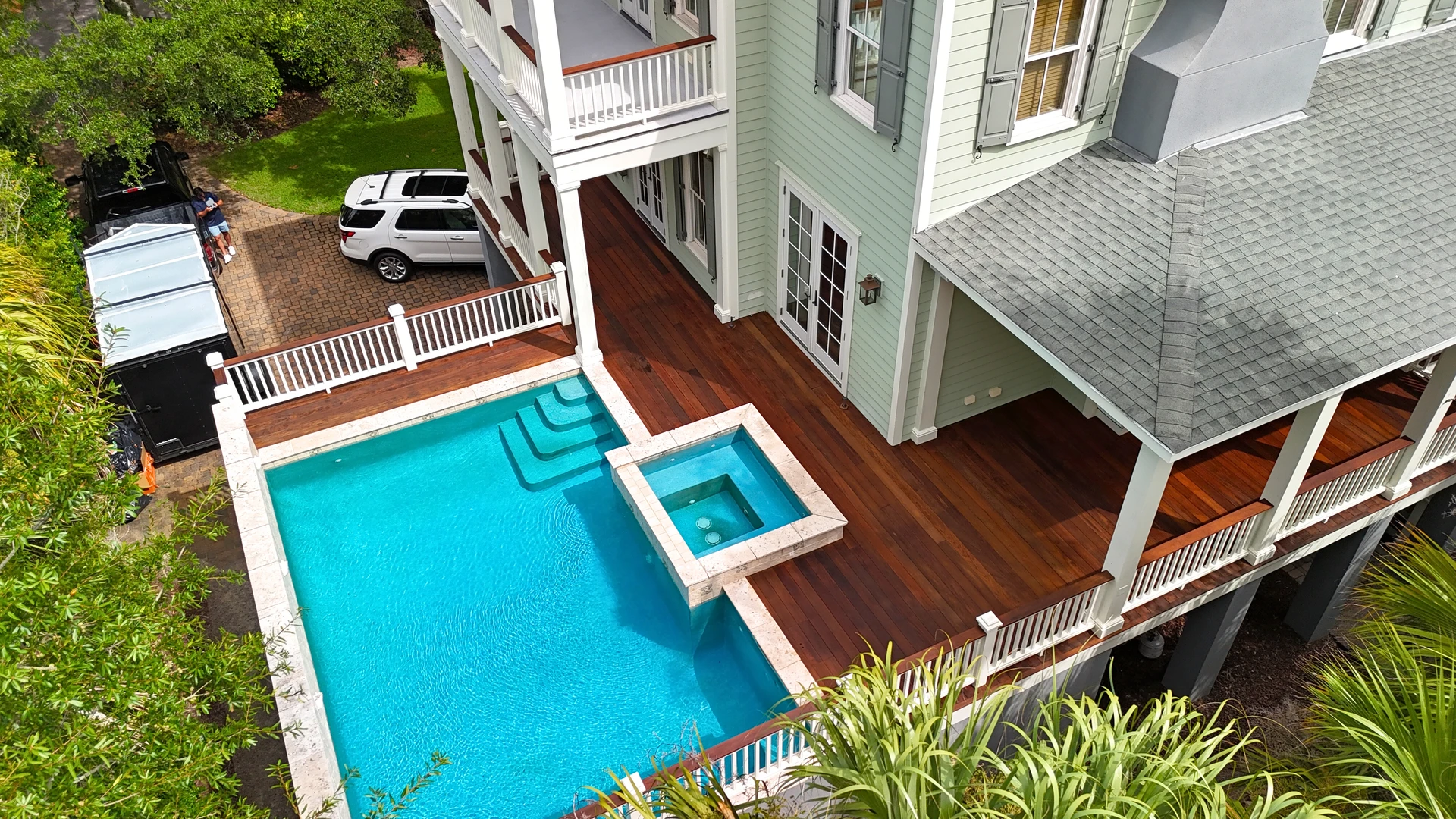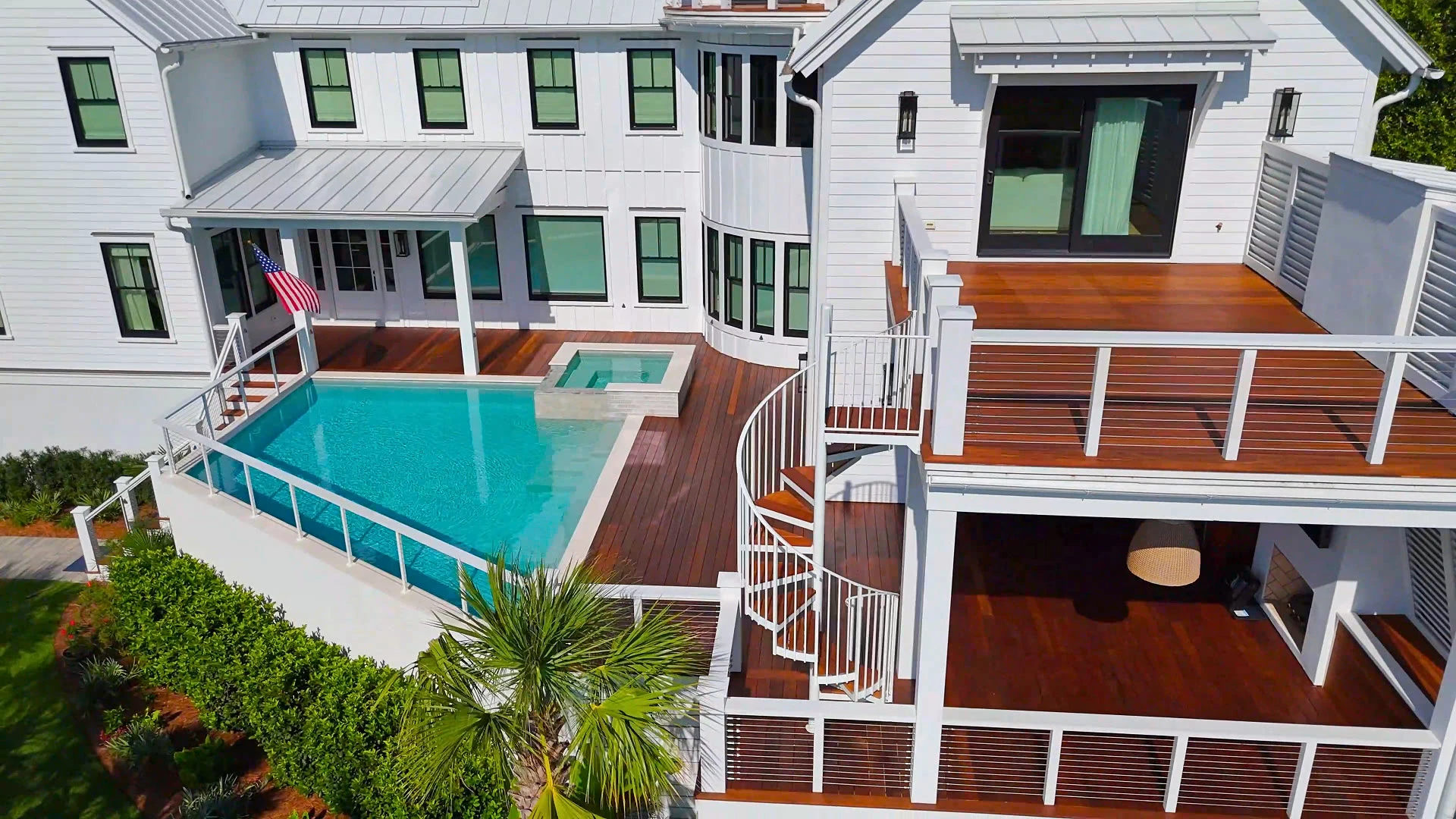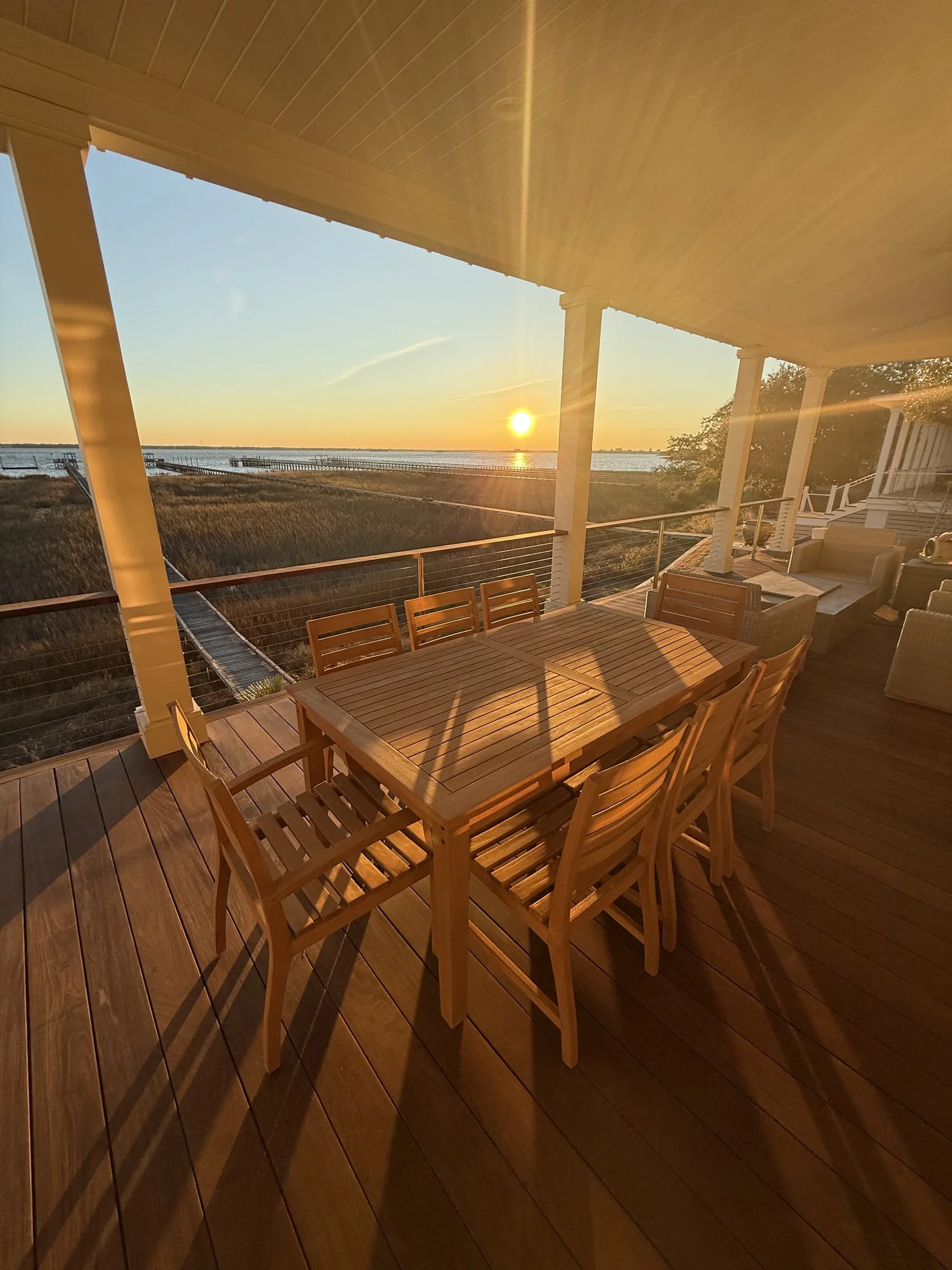
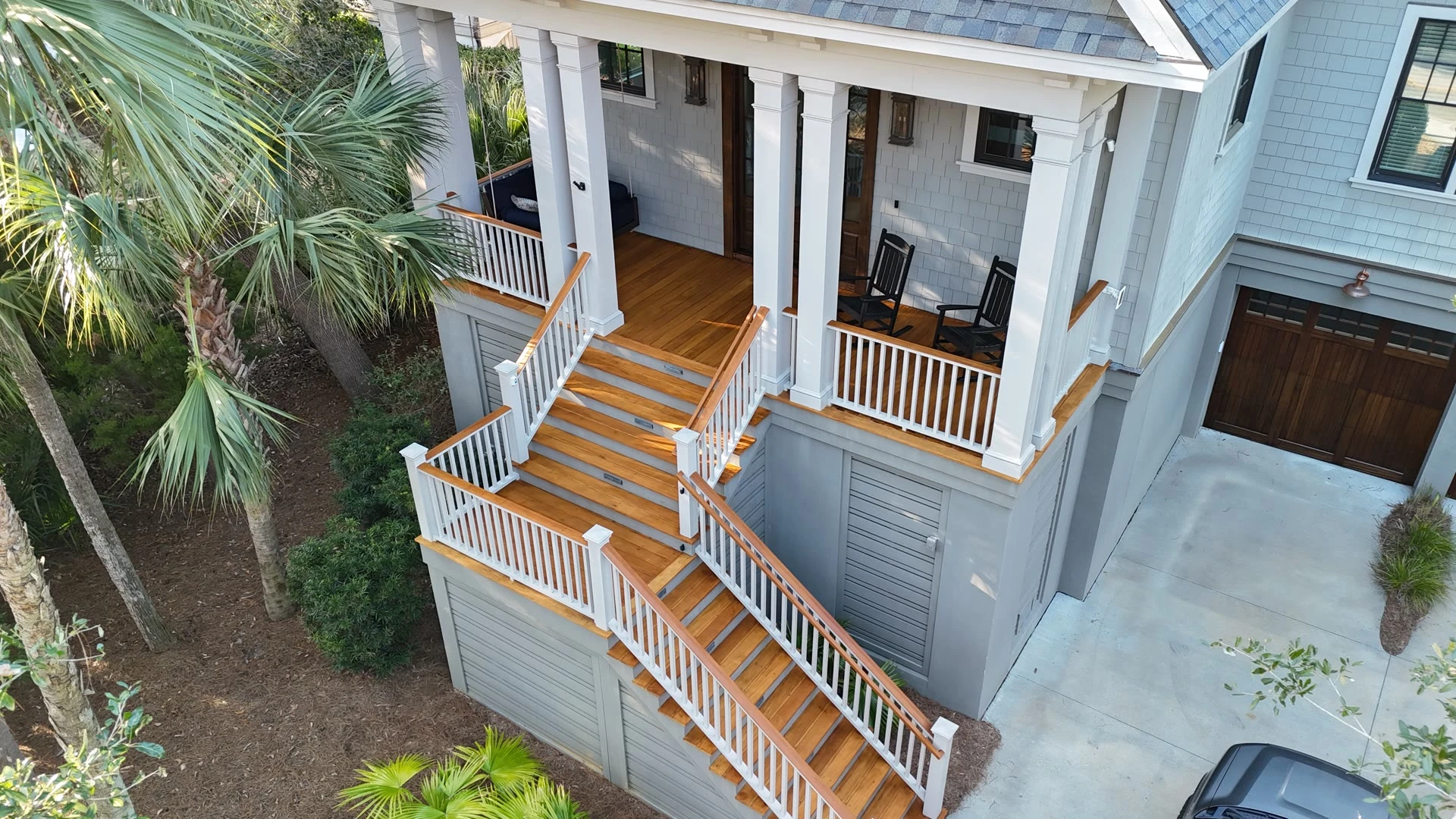
You notice the gray. Maybe a few boards have gone rough, or the stain from two years ago is already flaking. You search "deck restoration near me" and start wondering what this is going to run you. Deck restoration cost in Charleston, SC runs differently than the national averages you'll find online. Here's what the real numbers look like.
What shape is your deck actually in?
Most decks we look at fall into one of three buckets.
The first: tired but sound. Faded, maybe some surface mildew, but the wood underneath is fine. No soft spots, no rot.
The second: a few seasons of neglect. Peeling finish, mildew working into the grain, one or two boards starting to feel spongy at the edges. Still restorable, but the prep takes longer.
The third: been through it. Visible rot, boards that need pulling before anything else can happen. This one's rarer than people think when they call us.
What deck restoration costs in Charleston, SC
Pricing starts at $6 to $9 per square foot for softwood decks (pressure-treated pine, cedar) and $8 to $12 per square foot for IPE and Garapa. Hand railings and toe kicks are quoted separately. Here's what those numbers work out to by deck size:
Softwood (pressure-treated pine, cedar):
- 200 sq ft: $1,200–$1,800
- 300 sq ft: $1,800–$2,700
- 500 sq ft: $3,000–$4,500
IPE and Garapa:
- 200 sq ft: $1,600–$2,400
- 300 sq ft: $2,400–$3,600
- 500 sq ft: $4,000–$6,000
A few things add to the base number: multi-level decks mean more edges, more transitions, more masking to tape off. Board replacement adds $150–$400 when a few need swapping before finish goes down. And if the last contractor used the wrong product, especially a film-forming finish on IPE, stripping it is its own job.
Why Charleston prices run higher than the national average
You'll see articles quoting $3–$5/sqft nationally. Charleston consistently runs at or near the top of that range, and it's not contractors padding margins.
Salt air breaks down finishes faster than anything you'd see inland. High humidity means you can't rush the prep — a surface that holds moisture needs to be right before anything goes on it. The UV here hits harder than New England or the Midwest. Whether you're on Johns Island dealing with tidal creek moisture, waterfront on Kiawah, or on a shaded lot in Mount Pleasant, the conditions are working against the finish year-round. The products that actually hold up in coastal SC cost more, and there's a reason for that.
What the prep actually does
Most of the value in a professional restoration is in the prep, not the finish itself. Surface inspection to catch boards that need replacing. Pressure washing at the right PSI for your wood species (too high and you damage the grain). Sanding or stripping down to bare wood if the old finish has failed. Then the right product matched to your species and your sun exposure.
The finish from a hardware store can look great going on. What tells you whether the job was done right is how it looks eighteen months later.
When to DIY and when to call someone
If the wood still looks solid and the last professional job was done right, you can handle light annual upkeep yourself: a rinse and a fresh coat. That's it.
When you start seeing peeling, graying, or cracking, call someone. Do the water test first: sprinkle a little water on the deck. If it beads, the finish is still active. If it soaks in, it's gone. Visible mold between boards, soft spots, or any uncertainty about what was applied last time are all reasons not to DIY it.
IPE is a different animal
If you have an IPE deck, the rules shift a bit. Its density makes it reject film-forming finishes. They peel off instead of bonding. It needs a penetrating hardwood oil, reapplied every 6 to 12 months in this climate.
Done right, an IPE deck can outlast most other materials by decades. Skip too many cycles and by the time it starts graying and cracking at the surface, you're looking at a harder restoration than you'd have needed with consistent maintenance. We see this more than we'd like.
Getting a quote
Free estimate on every job. We walk the deck, check for soft spots, look at the existing finish, and give you a written breakdown before anything starts. If it doesn't need professional work yet, we'll say that too.
Frequently asked questions
The questions we hear most from Charleston homeowners.
How much does deck restoration cost in Charleston, SC?
Softwood decks (pressure-treated pine, cedar) start at $6–$9 per square foot. IPE and Garapa start at $8–$12 per square foot. A typical 300 sq ft softwood deck runs $1,800–$2,700; the same size in IPE or Garapa runs $2,400–$3,600. Hand railings and toe kicks are priced separately on top of the deck surface.
How is deck restoration different from deck refinishing or deck staining?
The terms get used interchangeably. Deck refinishing and deck staining usually mean applying a new coat with light prep. Restoration means a more thorough process: full inspection, cleaning, stripping if needed, any necessary repairs, then finishing. In Charleston's climate, doing the prep right the first time almost always pays for itself.
How often does a deck need to be restored in South Carolina?
Most wood decks in coastal SC need professional attention every 2 to 4 years depending on sun exposure and species. IPE needs oil reapplied every 6 to 12 months. Pressure-treated pine and softer woods typically need staining or sealing every 2 to 3 years. Annual cleaning between professional treatments extends the time between full restorations.
Is it worth restoring an old deck or should I just replace it?
In most cases, restoration is the better call. It runs 30 to 50% less than full replacement, with no demolition waste and no weeks of downtime. The exception is when structural members are compromised: posts rotted through, joists cracked, ledger boards pulling away. We check all of that upfront and give you an honest read before any work starts.