Once you have decided to refinish the door and settled on a package, there is one choice left that people tend to make in about four seconds: how shiny it should be.
It deserves more than four seconds. Sheen changes how the door reads from the street, how much maintenance it asks for, and how forgiving the finish is about the wood underneath it. It also changes the price.
What sheen actually is
Sheen is how much light the surface reflects back at you. A matte finish scatters light. A high gloss finish reflects it like a mirror. Semi-gloss sits between them.
It is worth being clear about what sheen is not. It is not protection. On our systems the protective build underneath is the same marine-grade UV varnish regardless of which sheen you choose. The sheen is the top layer and the visual decision. A matte door and a gloss door with the same package are equally protected.
Matte
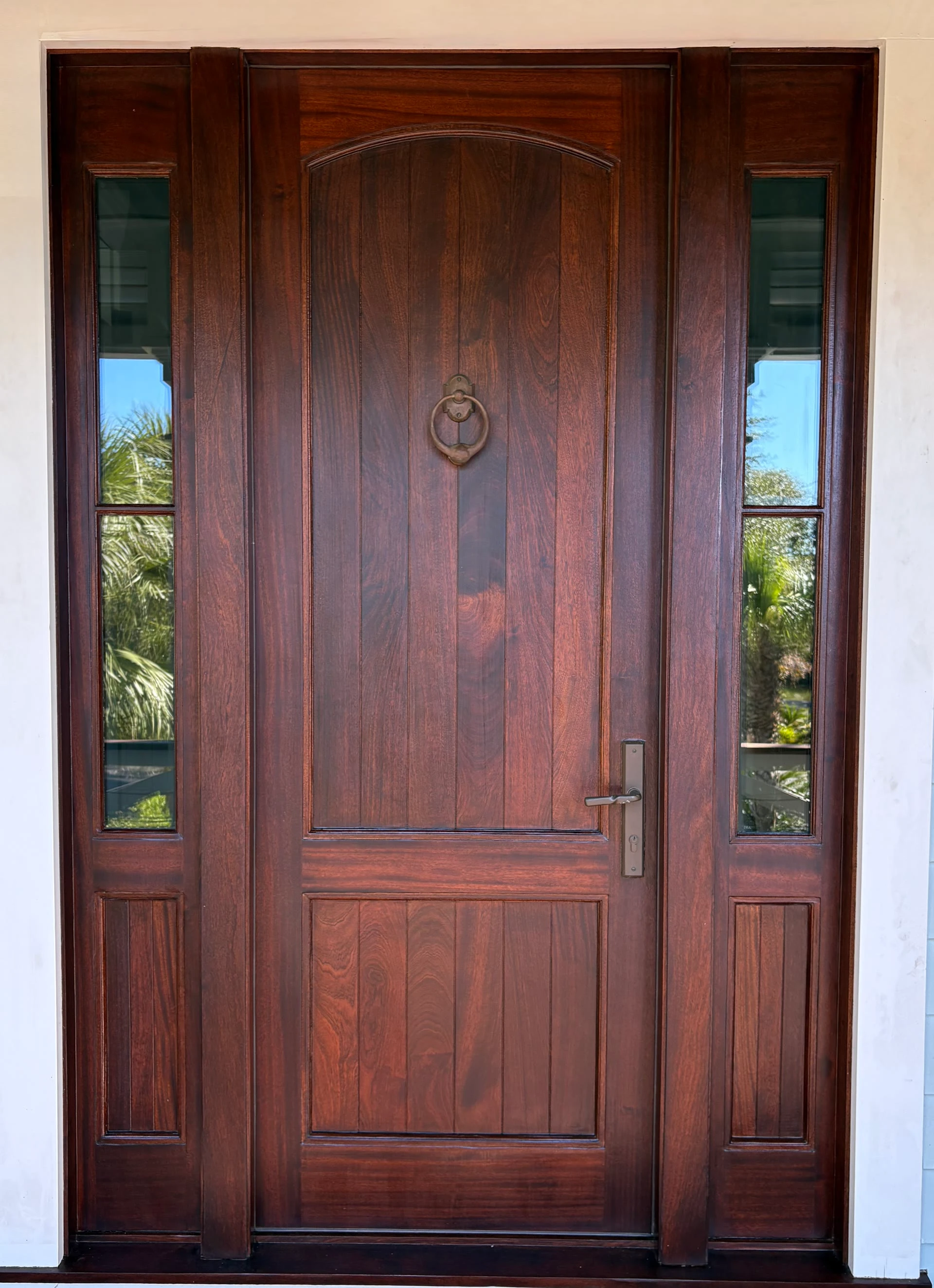
Matte reads as understated and modern. It shows the grain and the color of the wood without a layer of reflection sitting on top of it, which is why it tends to suit a door where the wood itself is the feature.
Its practical advantage is forgiveness. Because a matte surface scatters light, it hides minor surface variation, small imperfections in the wood, and the ordinary dust and fingerprints of a door people actually use. It is the low-maintenance choice in visual terms.
Our Elite system finishes in matte by default, with two to three matte topcoats over the varnish build.
Semi-gloss
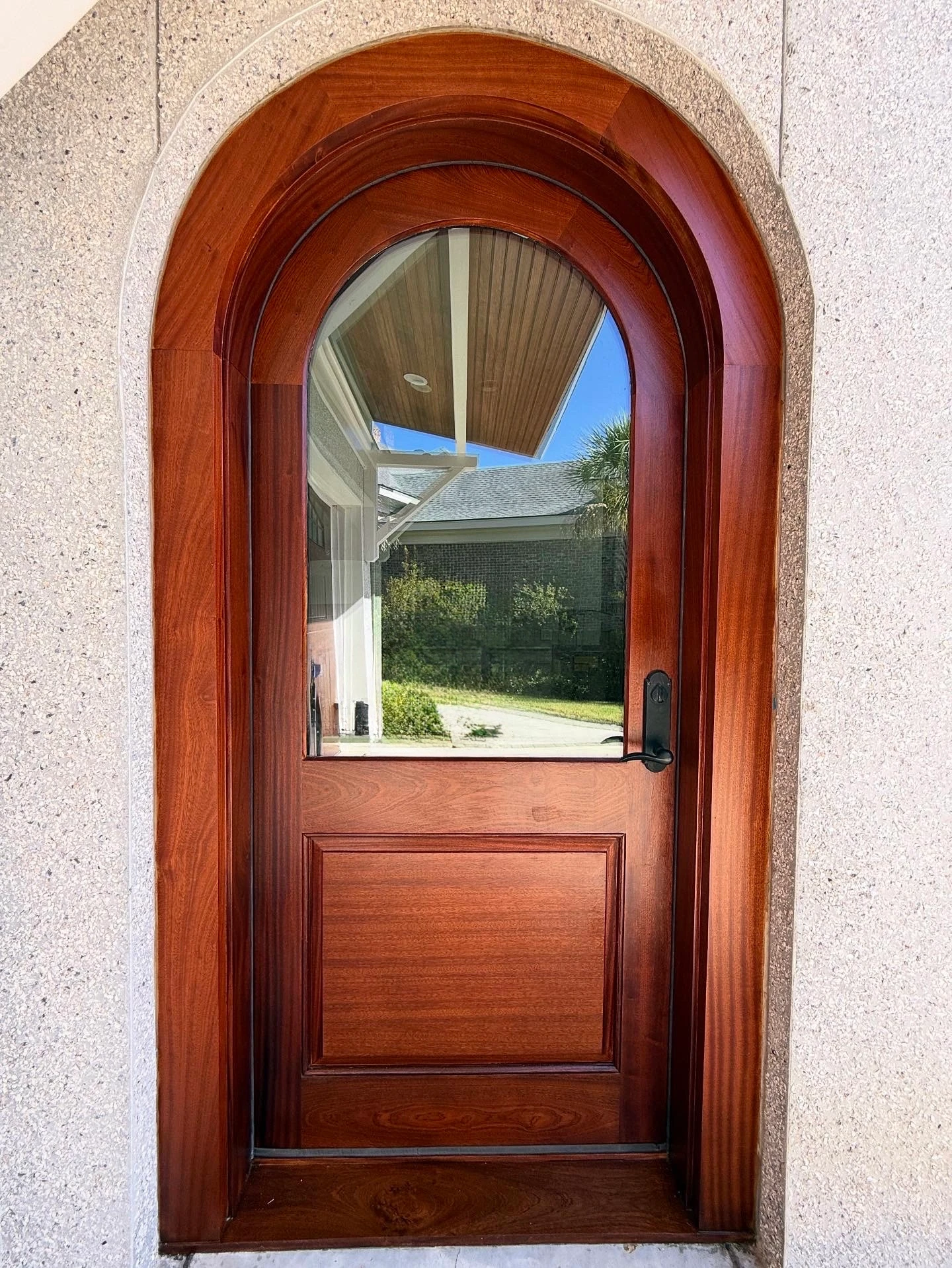
Semi-gloss is the middle, and for most Charleston front doors it is the safe answer. Enough reflection to give the wood depth and make the grain look rich, not so much that the door becomes a mirror for the yard.
It is the sheen that looks correct on the widest range of architecture, from a Mount Pleasant traditional to a downtown historic entry. If you are torn and there is no strong reason to go either direction, this is the one.
High gloss
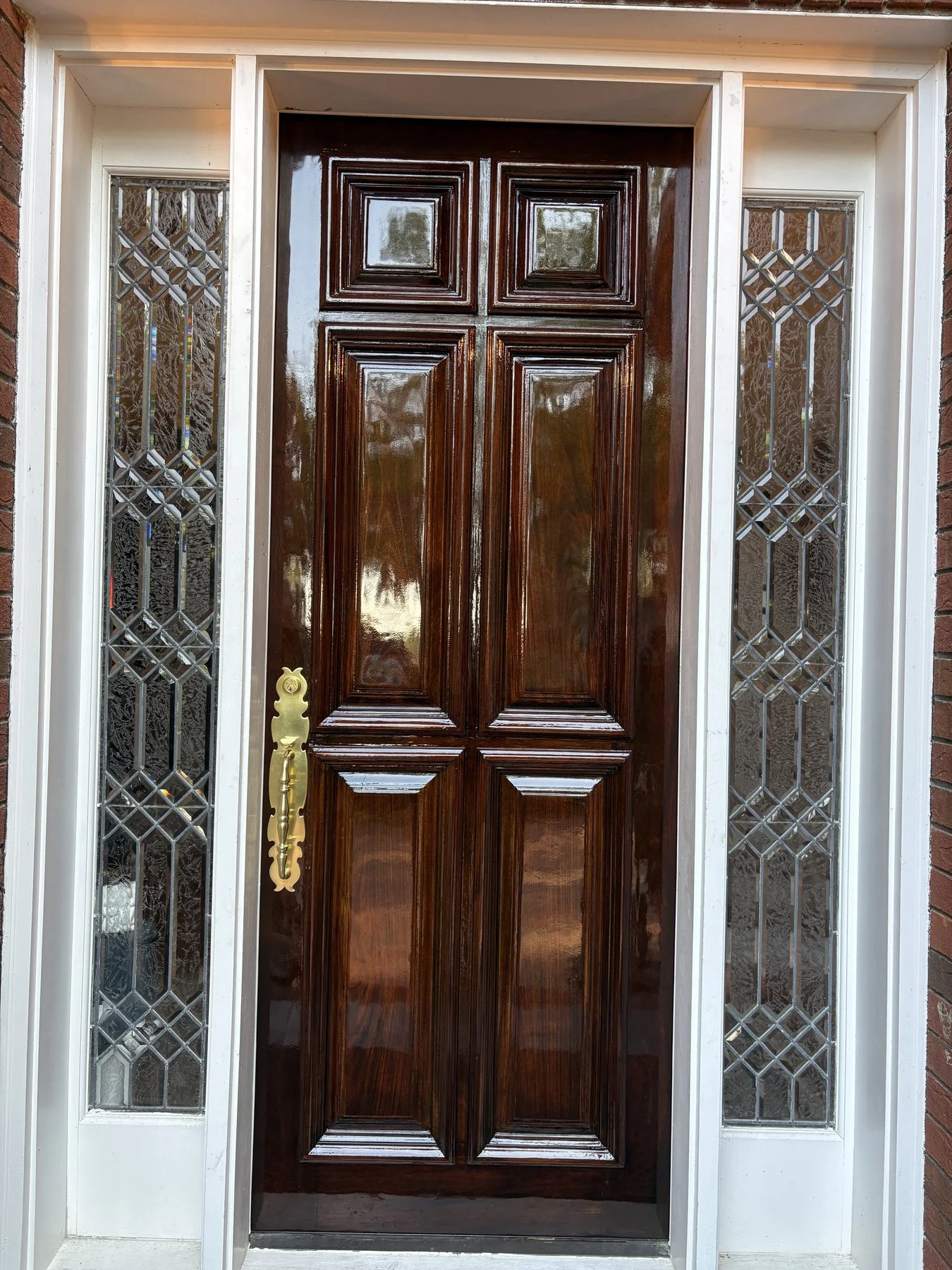
High gloss is a statement. Done properly it looks like furniture, or like the brightwork on a boat, which is not a coincidence. It gives the deepest sense of depth in the wood and it is unmistakable from the street.
It also hides nothing. A gloss surface reflects light evenly across the whole door, which means any waviness, any sanding mark, any imperfection in the substrate shows up clearly. Achieving a gloss finish worth having takes a substantially more exacting leveling and sanding process underneath.
That is why high gloss carries a premium of roughly fifteen percent. The additional cost is labor in the prep, not a more expensive product.
One honest caution: gloss shows fingerprints, water spotting, and dust more readily than matte. On a heavily used family entry that gets touched a hundred times a week, that is worth thinking about. On a formal entry, it is rarely an issue.
How to choose in practice
- Choose matte if you want the wood to speak for itself, the door sees heavy daily use, or the architecture is modern or restrained.
- Choose semi-gloss if you want depth and richness without commitment to a look, or you simply are not sure. It is the widest-fitting answer.
- Choose high gloss if the door is a focal point, the entry is formal, and you want the finish itself to be part of the impression. Budget for the premium and expect to wipe it down more often.
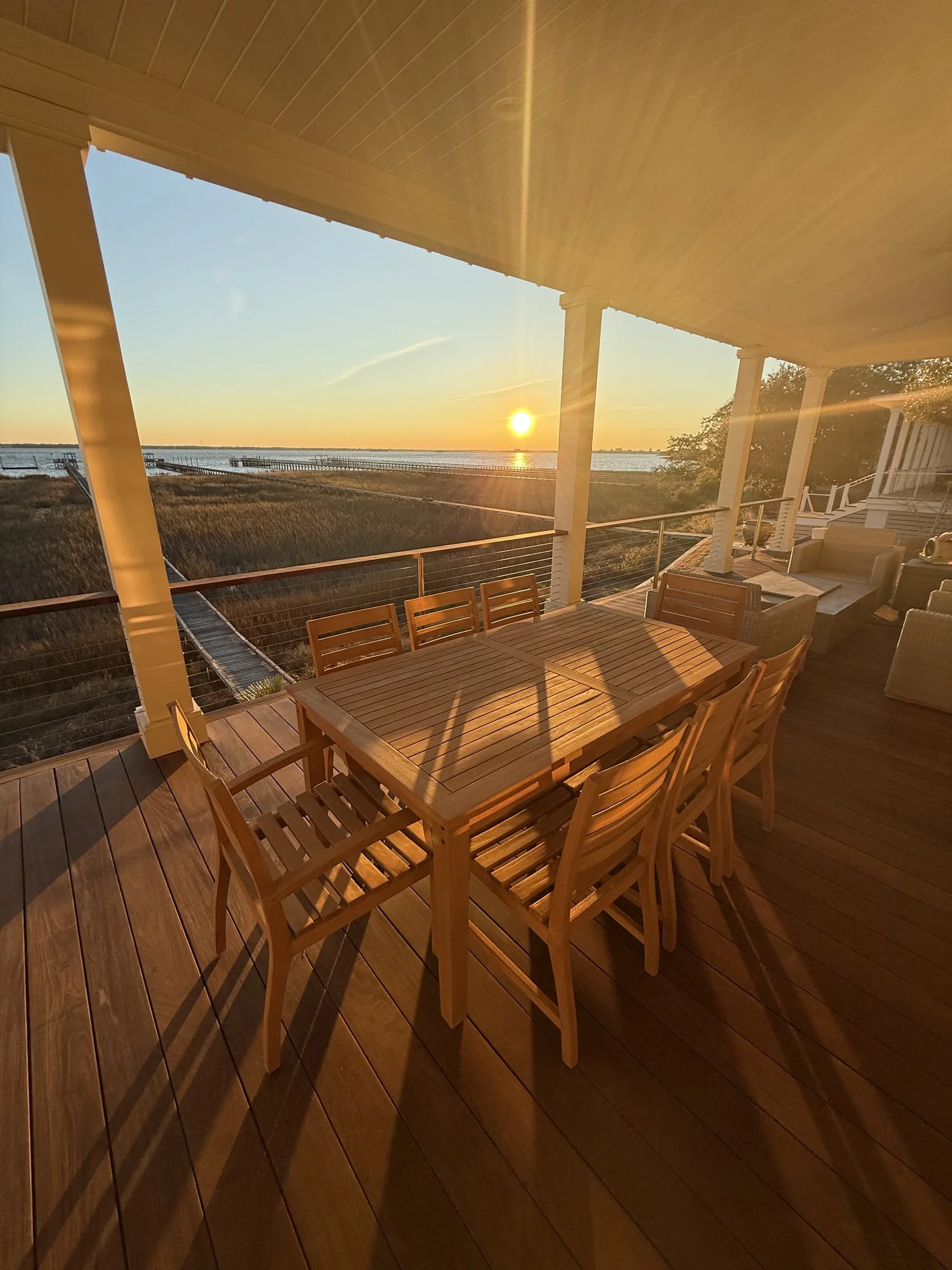
One more consideration specific to the Lowcountry: think about sun exposure. A west-facing door in direct afternoon light in a high gloss finish will throw a lot of glare at certain hours. Some people love it. Some find it harsh. It is worth standing in front of the door in the late afternoon before deciding.
Sheen consistency across the entry
If you have sidelights, a transom, or a matching set of double doors, the sheen should carry across all of them. Mixed sheens on a single entry read as a mistake even to people who cannot articulate why. We quote the whole entry as a unit for exactly this reason.
Frequently asked questions
Does sheen affect how well the finish protects the door?
No. The protective build is the same marine-grade UV varnish underneath every sheen we offer. Sheen is the top layer and the visual decision. A matte door and a gloss door on the same package have the same protection.
Why does high gloss cost more?
Because a gloss surface reflects light evenly and therefore reveals every imperfection in the wood beneath it. Getting a gloss finish that looks right requires far more exacting sanding and leveling. The premium of roughly fifteen percent is prep labor, not materials.
Which sheen holds up best in Charleston sun and salt?
They perform comparably, because the UV protection lives in the varnish coats rather than in the sheen. The bigger factors in how long any finish lasts here are the number of coats, the quality of the prep, and how much direct sun the door takes.
Can I change the sheen at the next refinish?
Yes. Sheen is not a permanent commitment. A future refinish strips back and rebuilds, so you can go a different direction then if your taste or the house has changed.
Do you have to match the sheen on sidelights and transoms?
You should. Mixed sheens across a single entry look wrong even to people who cannot say why. We quote and finish the entry as one unit so it reads as intentional.
Can I see the sheens before deciding?
Yes. We bring samples to the on-site assessment so you can see each sheen on wood, in your own light, next to your own door. Photos on a screen are not a reliable way to judge this.