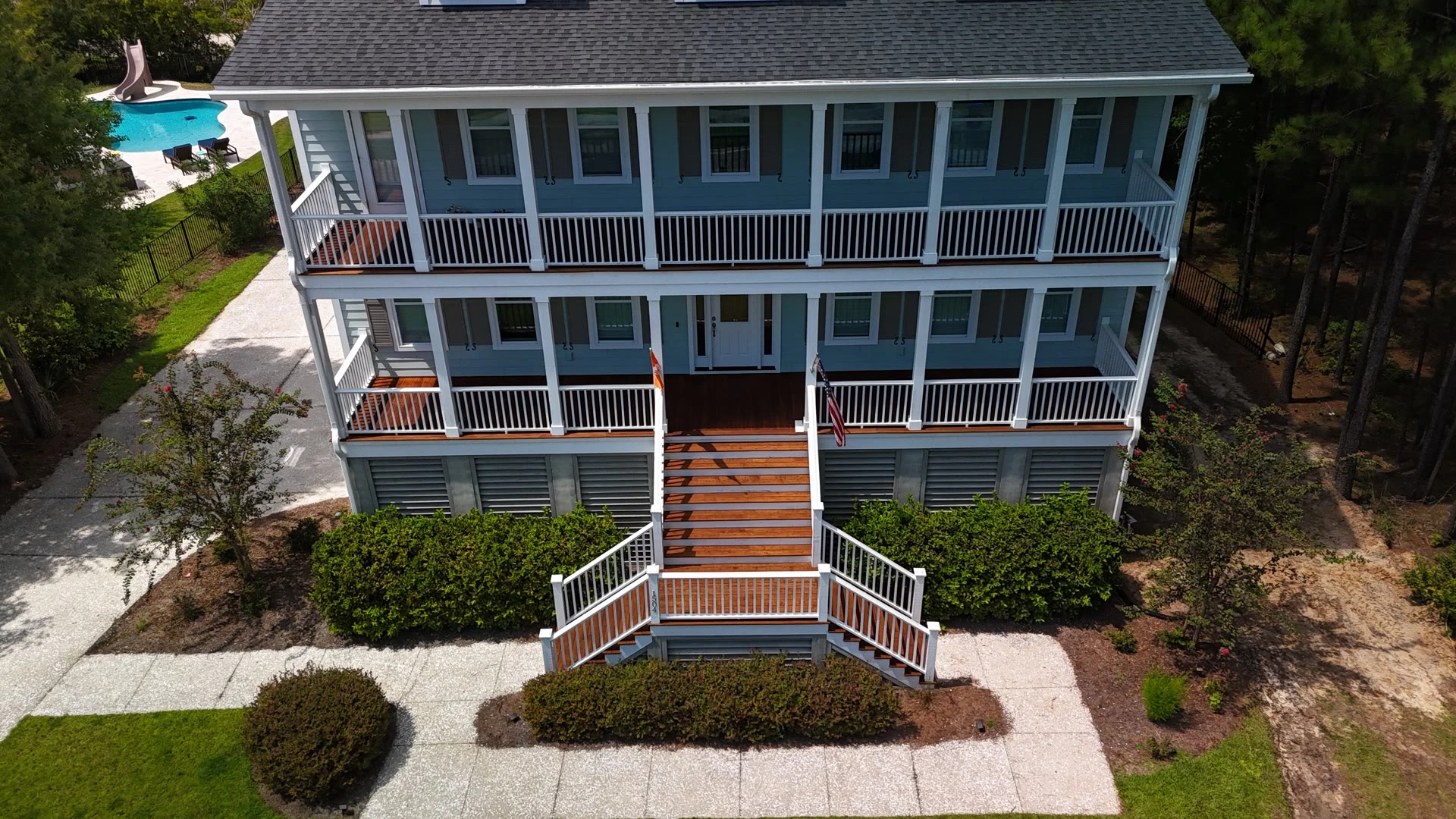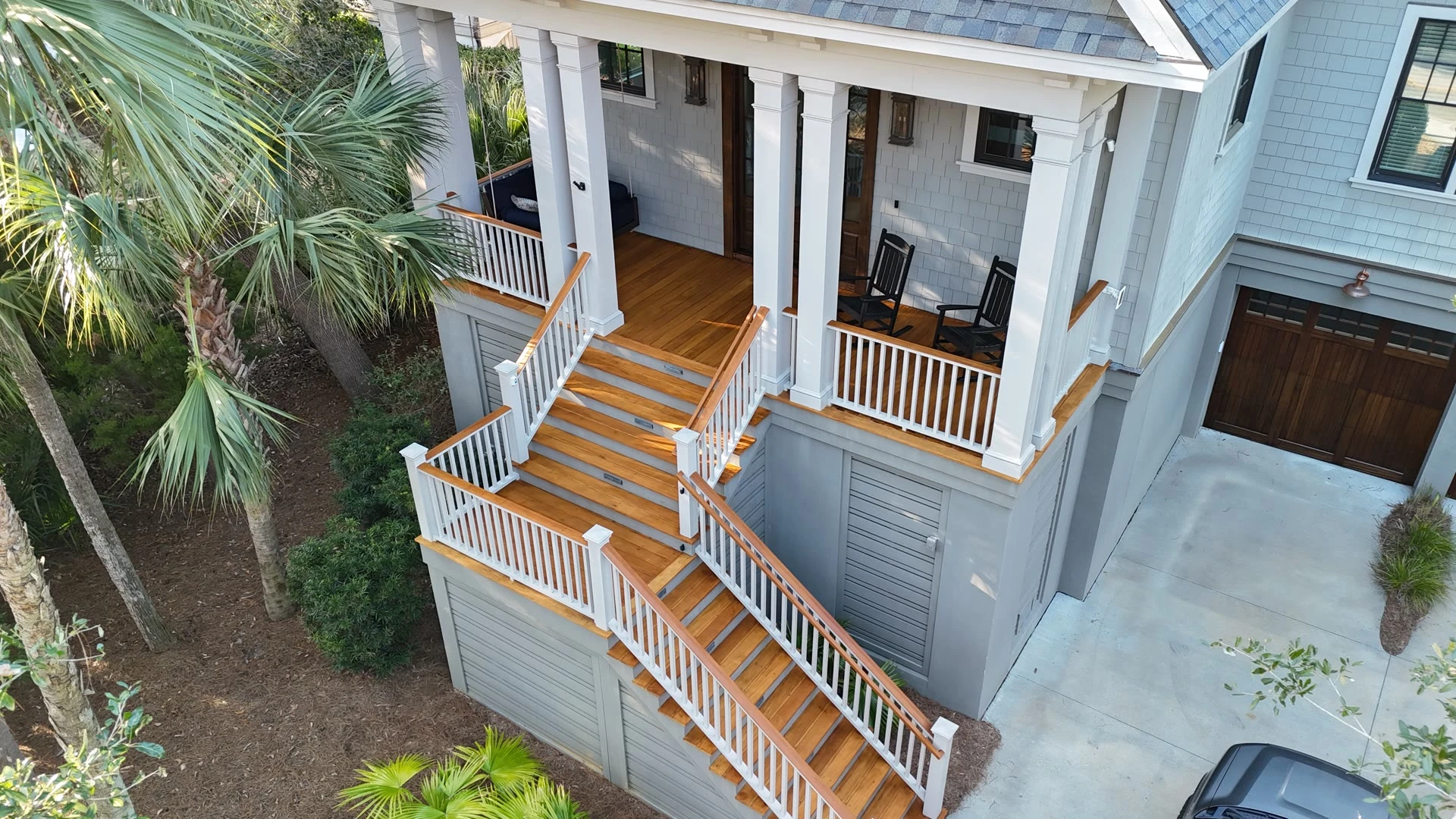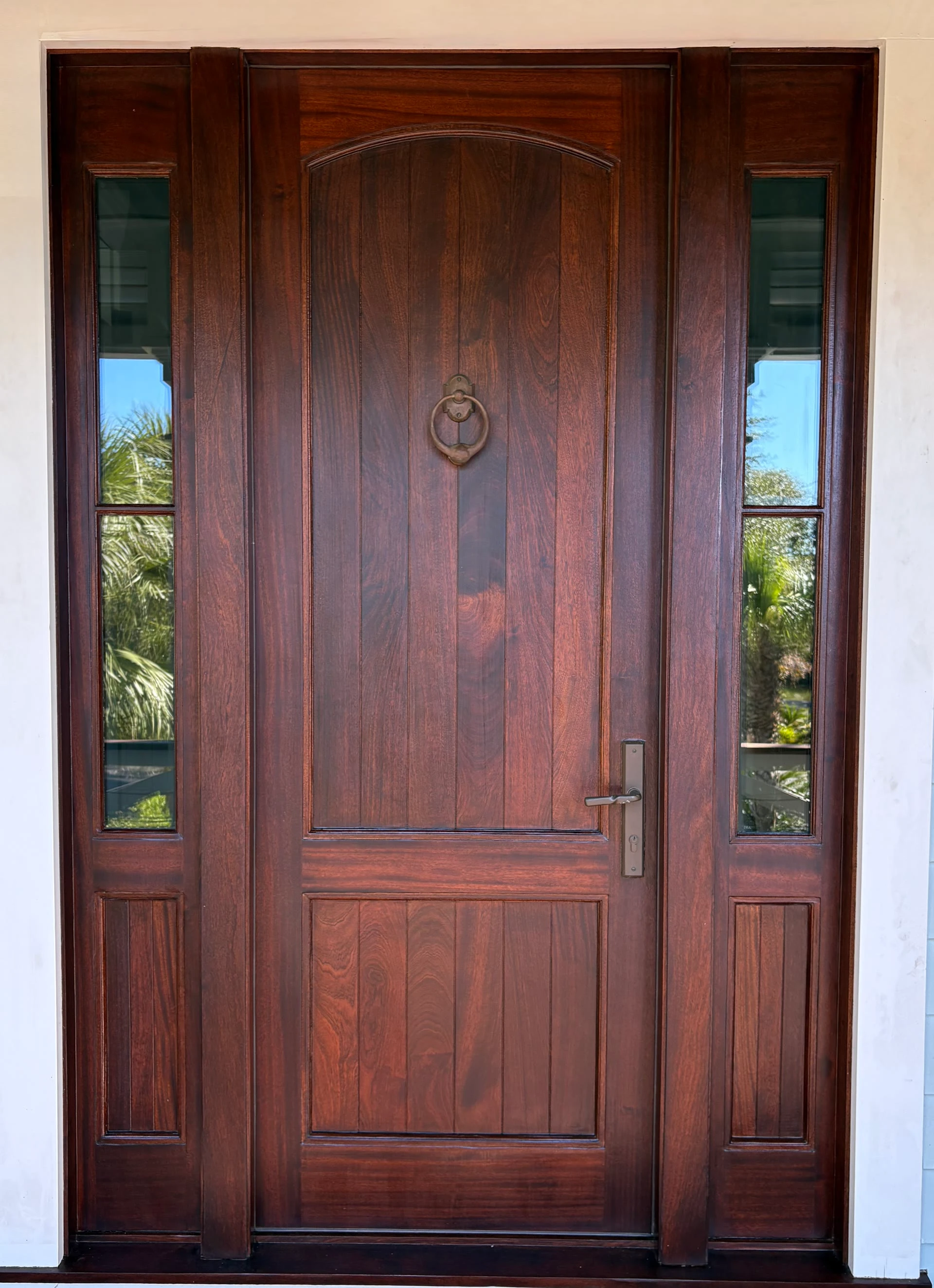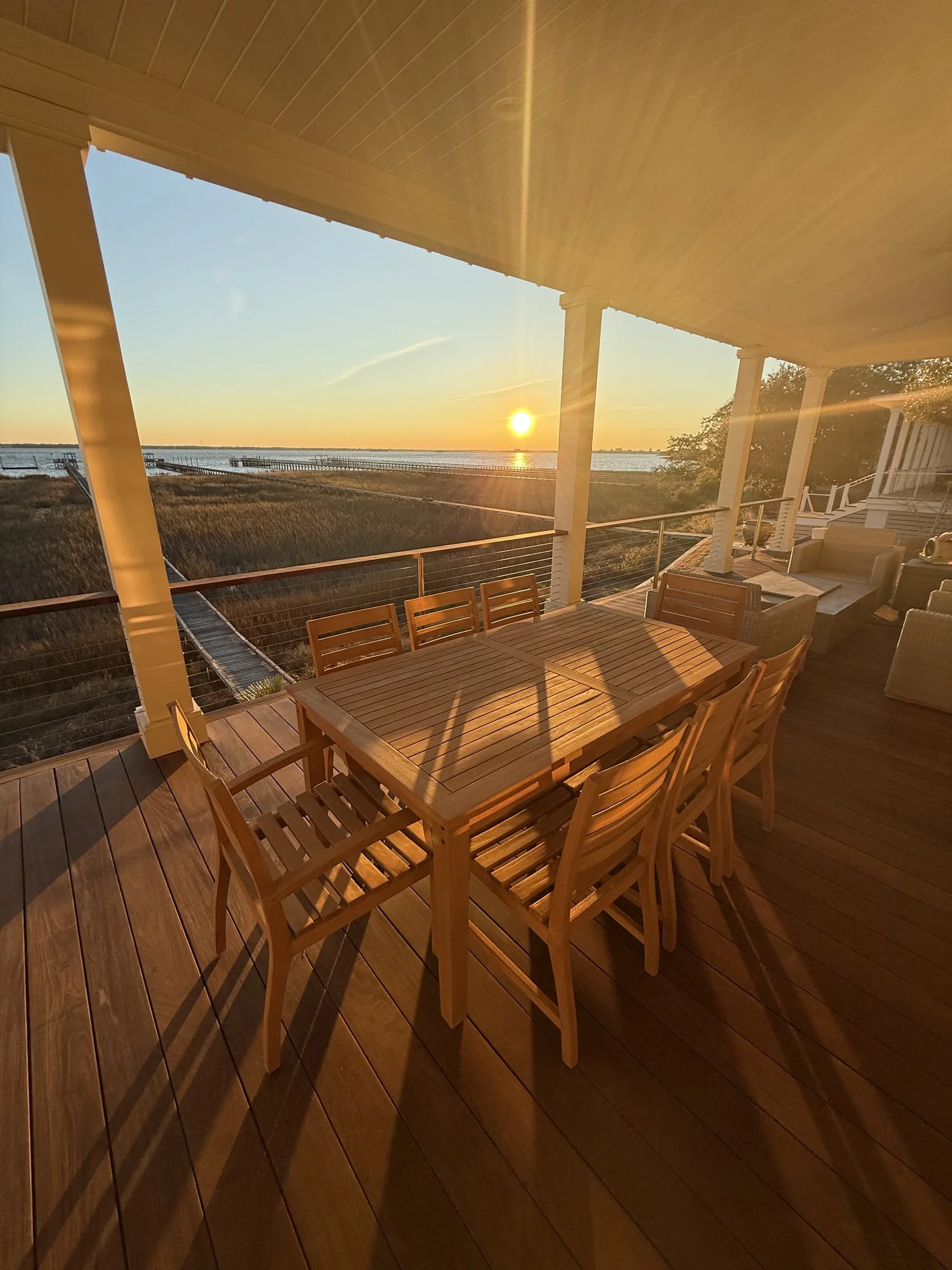
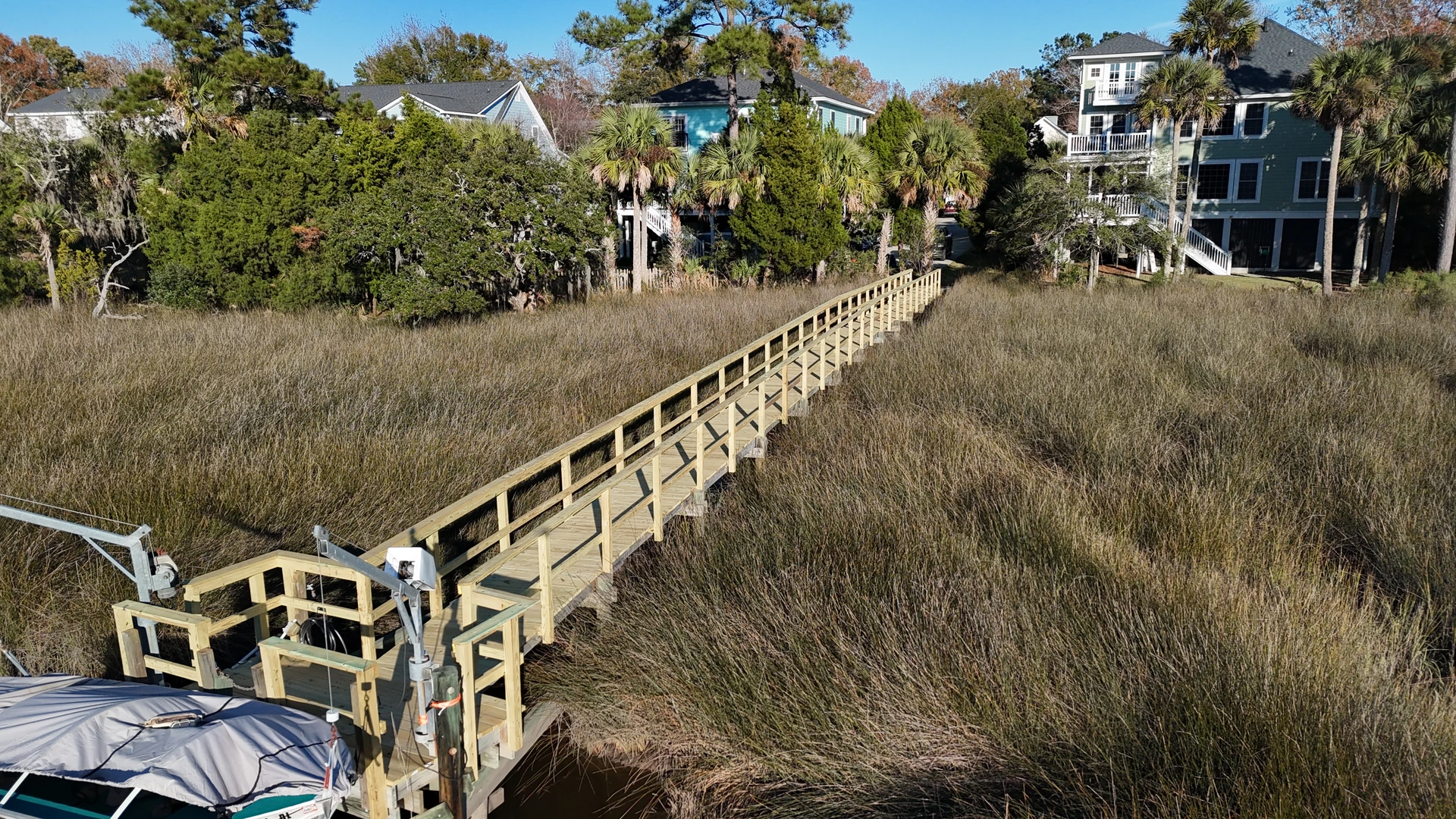
Late summer into fall is the active stretch of the Atlantic hurricane season, and around Charleston that means a run of heavy rain, wind-driven salt, and the occasional serious storm. Most homeowners think about the roof and the windows. Almost nobody thinks about the deck, the dock, or the front door until afterward.
The expensive damage is rarely dramatic. It is water that got somewhere it should not have, into wood whose finish had already given out.
What a storm actually does to exterior wood
Three things, and they compound.
- Wind-driven rain finds the gaps. Any place the finish has cracked, worn thin, or lifted is an open door. Water gets under the coating and into the grain, and it does not dry out quickly in Lowcountry humidity.
- Salt spray reaches farther than you think. In a strong blow, salt lands on doors and decks well inland of the water and then sits there. It accelerates the breakdown of any coating it settles on.
- Debris does mechanical damage. Branches and windblown grit score the finish. A scratch through the coating on a horizontal deck board is a place where water pools and sits.
A deck or dock with a sound finish sheds all of this. One that was already gray, dry, or flaking absorbs it.
Before a storm: the short list
None of this takes long, and all of it matters more than it sounds.
- Clear the deck and dock completely. Furniture, planters, and grills become projectiles, and anything left sitting in place traps water underneath it for days.
- Pull planters and mats off the boards. A rubber mat on a wet deck holds moisture against the wood the entire time the weather lasts. This is a leading cause of the dark patches people find afterward and cannot explain.
- Clear the drainage. Leaves packed between boards or against a dock stringer turn a deck into a shallow pond.
- Look at your door. If the finish is hazy, chalky, or cracked at the bottom rail, that is where storm water will get into the wood. Sidelights and thresholds are the usual entry points.
- Photograph everything now. Ten minutes of phone photos before a storm is what makes an insurance conversation afterward go your way.
After a storm: what to check, in order
Once it is safe to be outside, walk the property and look for these in this order.
- Standing water that has not drained after a day. That points at a drainage problem that will keep causing damage long after the storm.
- Boards that feel soft underfoot, especially near posts, stair stringers, and anywhere the deck meets the house.
- Dark staining or a fuzzy gray cast. That is mildew getting a foothold in wood whose finish has been compromised.
- Grit and salt film. Rinse it off with fresh water sooner rather than later. Salt left to sit is doing active work on the finish.
- Loose fasteners and hardware. Wind flex backs screws out, and a raised fastener head becomes a water channel straight into the board.
The mistake that costs the most
Reaching for a pressure washer at full strength on a soaked deck. Wet wood is soft wood, and high pressure on soft wood tears open the grain. It looks clean the day you do it and it fails within a year, because you have turned a smooth surface into a rough one that holds water.
Same principle on a door. A failed finish gets stripped and rebuilt, not scrubbed harder. Aggressive cleaning on a coating that has already lost its integrity just drives water into the wood faster.
Why the timing works in your favor
Wood that comes out of a wet season is telling you exactly where it stands. The spots that hold water, the areas where the finish gave up first, the boards that darkened while everything around them stayed clean. That is a free diagnostic, and it is the most accurate one you will get all year.
Fall is also a good window for restoration work in Charleston. The extreme heat has eased, humidity is dropping off its August peak, and finishes cure well. A deck restored in the fall goes into winter protected and comes out of spring ready to use.
Frequently asked questions
When is hurricane season most active near Charleston?
The Atlantic season runs from June through November, with the busiest stretch generally falling between August and October. That is the window to have your exterior wood in good shape rather than on the list for next year.
My deck got soaked and now has dark patches. Is it ruined?
Usually not. Dark patches after a wet stretch are typically mildew and trapped moisture in wood whose finish has worn through, and that is exactly what a proper restoration corrects. What matters is whether the wood underneath is still sound, which we check first.
Should I pressure wash my deck after a storm?
Not at high pressure, and not while the wood is still saturated. Wet wood is soft, and aggressive washing tears the grain open and shortens the life of whatever finish goes on next. A fresh water rinse to get salt and grit off is helpful. Anything beyond that is a job for a restoration process, not a wand.
Can water damage a front door in a storm?
Yes, and the bottom rail is where it usually starts. Once the finish has cracked or worn thin down there, wind-driven rain gets into the end grain and stays. Catching it while it is still a finish problem is far cheaper than catching it after it has become a wood problem.
Is fall a good time to restore a deck in Charleston?
It is one of the better windows. The worst of the heat has passed, humidity is easing, and finishes cure reliably. It also means the work is done before the next season rather than after another year of exposure.