South Carolina's coast is paradise for outdoor living — but the same sun, salt air, and humidity that make it beautiful can be tough on wood. IPE, a dense tropical hardwood, handles the elements better than most species, yet it still needs the right oiling schedule to keep its rich color and protect the surface from UV fade and moisture.
What Is IPE and Why Does It Need Oiling?
IPE (pronounced ee-pay) is one of the hardest, most durable decking materials available. It's naturally resistant to rot, insects, and fire. But without regular oiling, IPE will weather to a silver-gray patina. While some homeowners prefer the silvered look, most want to maintain the wood's warm, chocolate-brown color.
Recommended Oiling Frequency for Coastal SC
- New IPE decks: First oil application 60-90 days after installation (allows pores to open)
- Established decks: Every 6-12 months depending on sun exposure and foot traffic
- High-traffic areas (stairs, main walkways): May need attention every 6 months
- Shaded areas: Can often go 12 months between applications
- Salt-spray zones (waterfront properties): Every 6 months minimum
Signs Your IPE Deck Needs Oiling Now
Perform the water droplet test: sprinkle water on your deck. If it beads up, the oil is still active. If it soaks in quickly, the protection has worn off and it's time to re-oil. Other signs include color fading toward gray, surface feeling dry or rough to the touch, and visible grain raising.
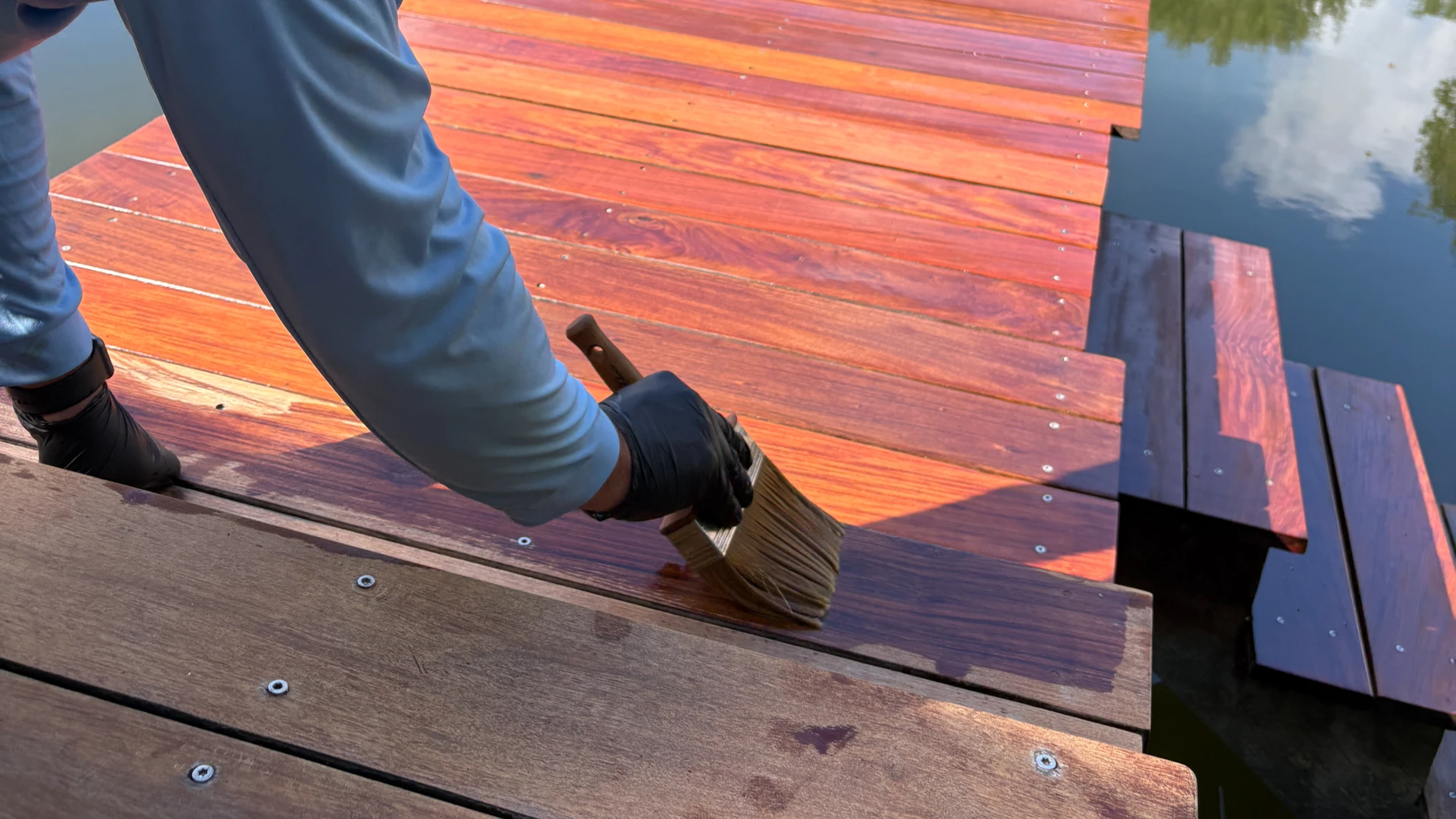
Choosing the Right Oil
Not all deck oils are created equal. For IPE in coastal South Carolina, you need a penetrating oil (not a film-forming finish) with strong UV inhibitors and moisture repellent properties. We use professional-grade hardwood oils specifically formulated for dense tropical species.