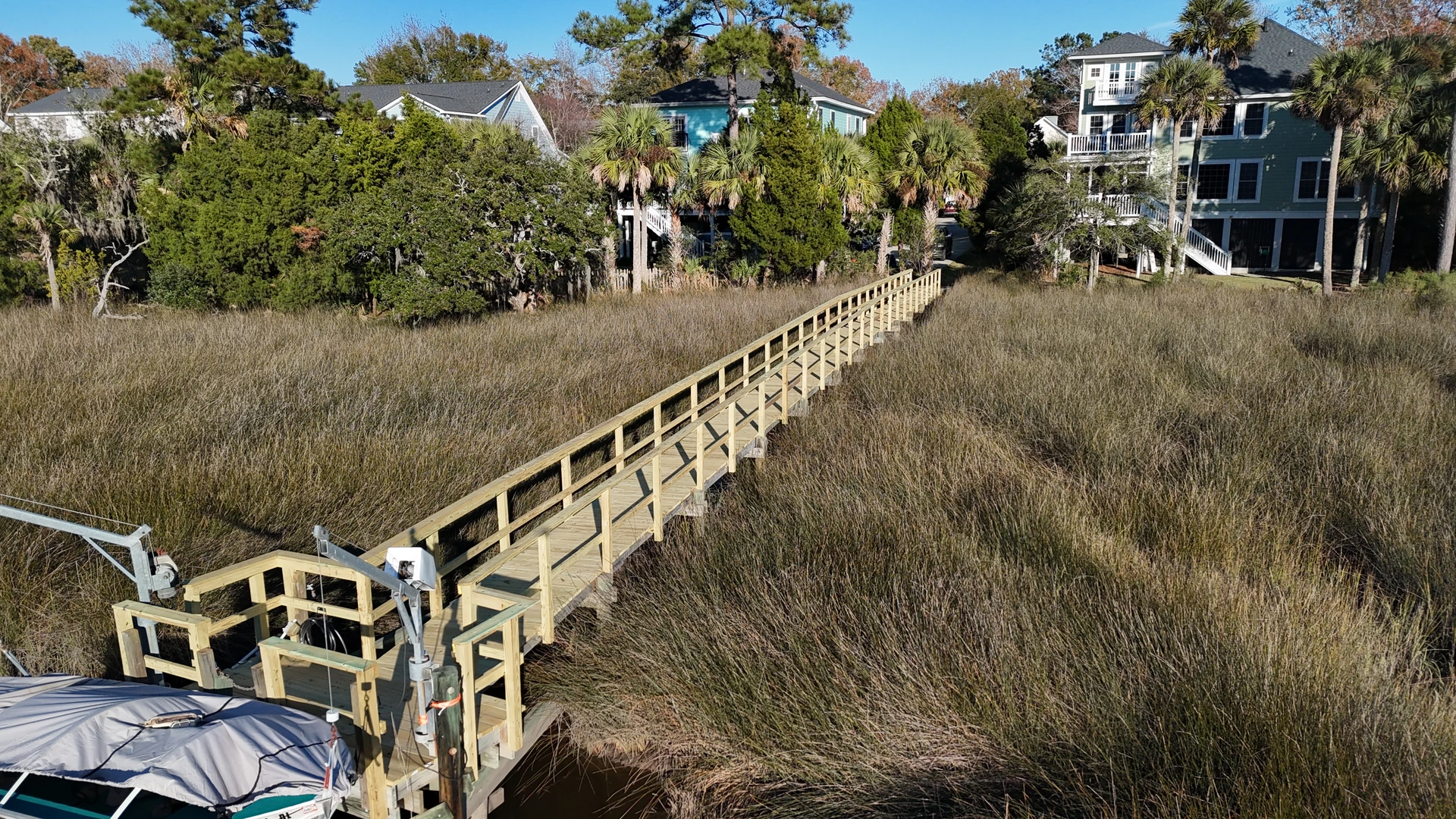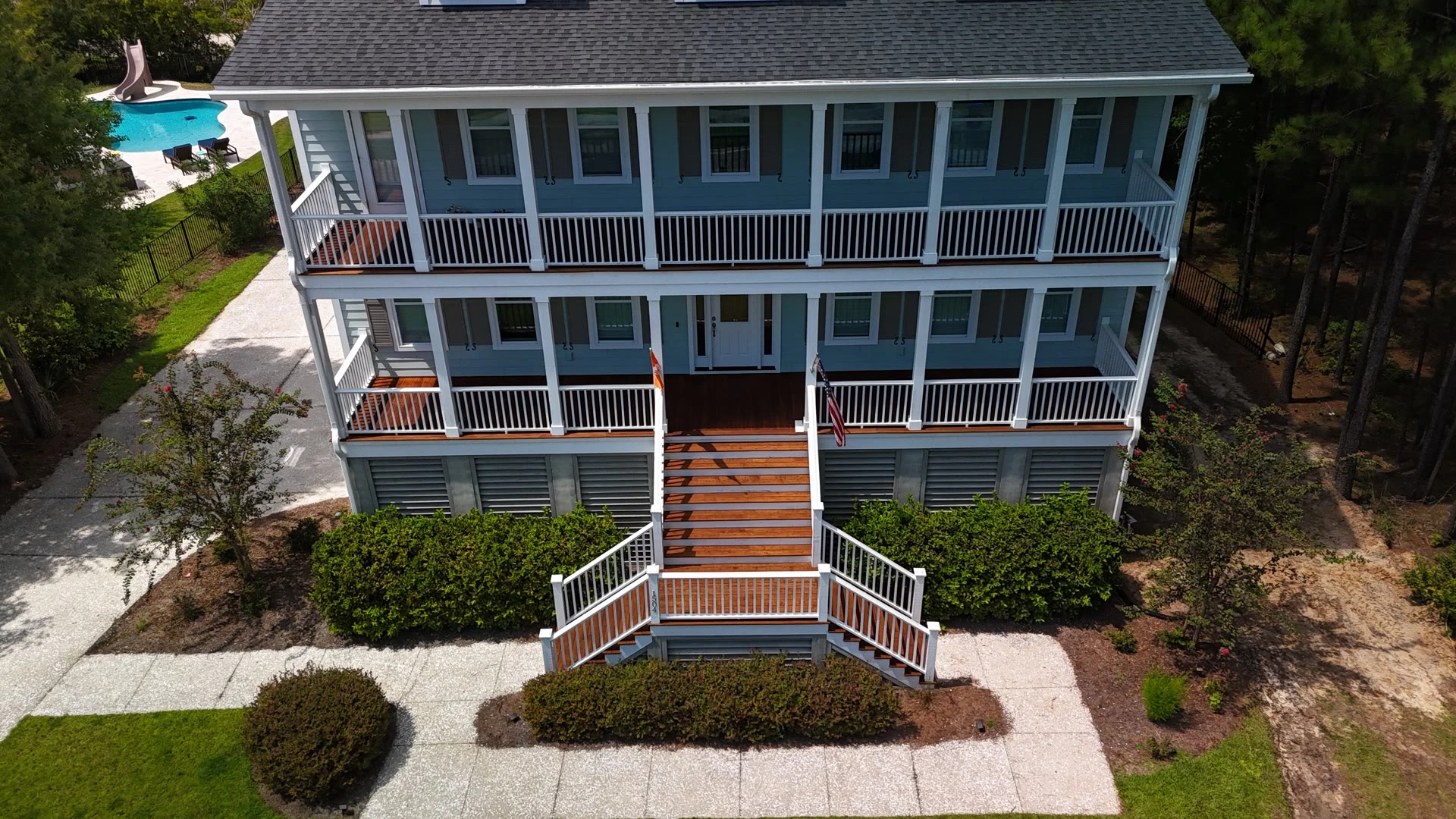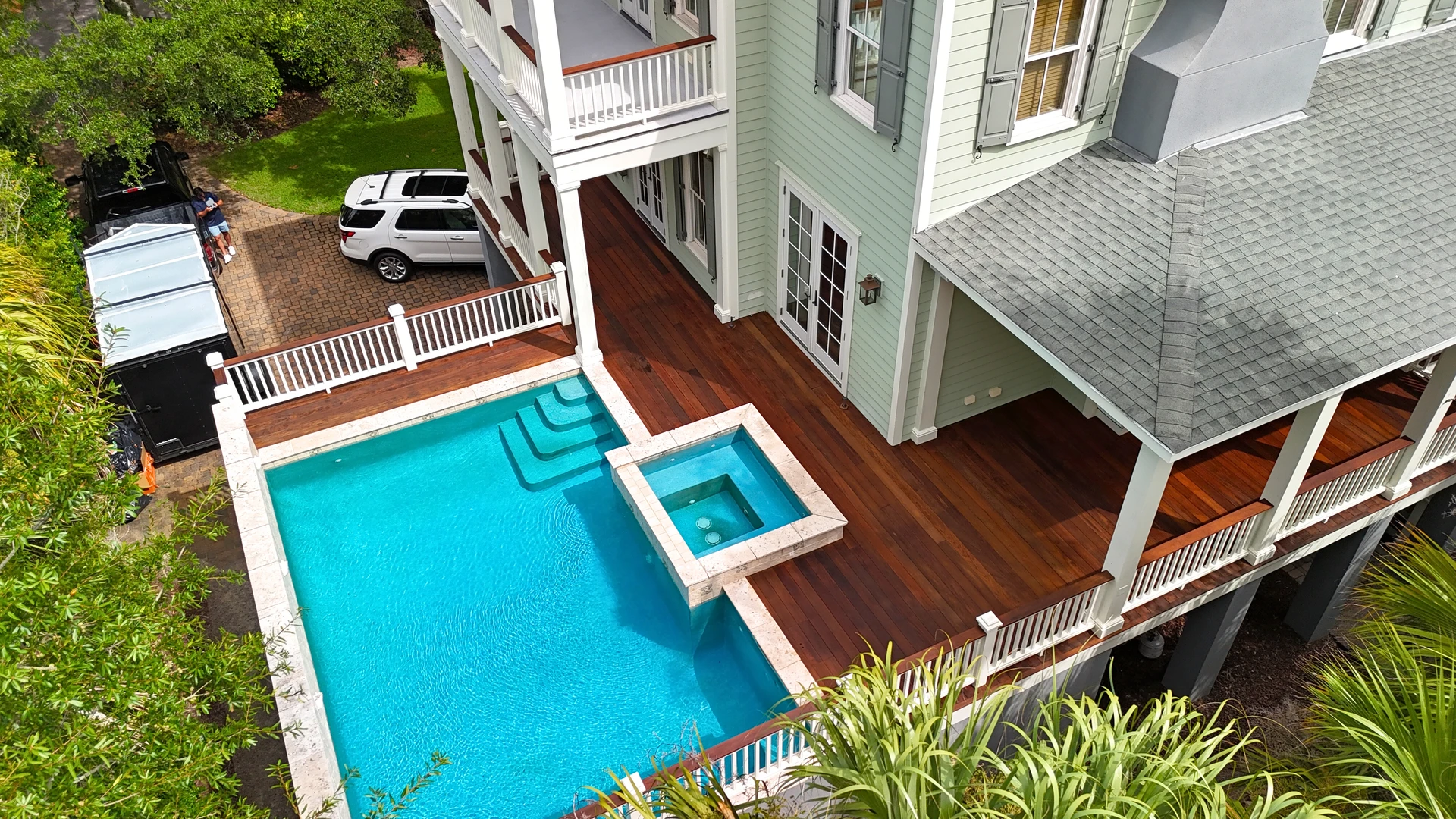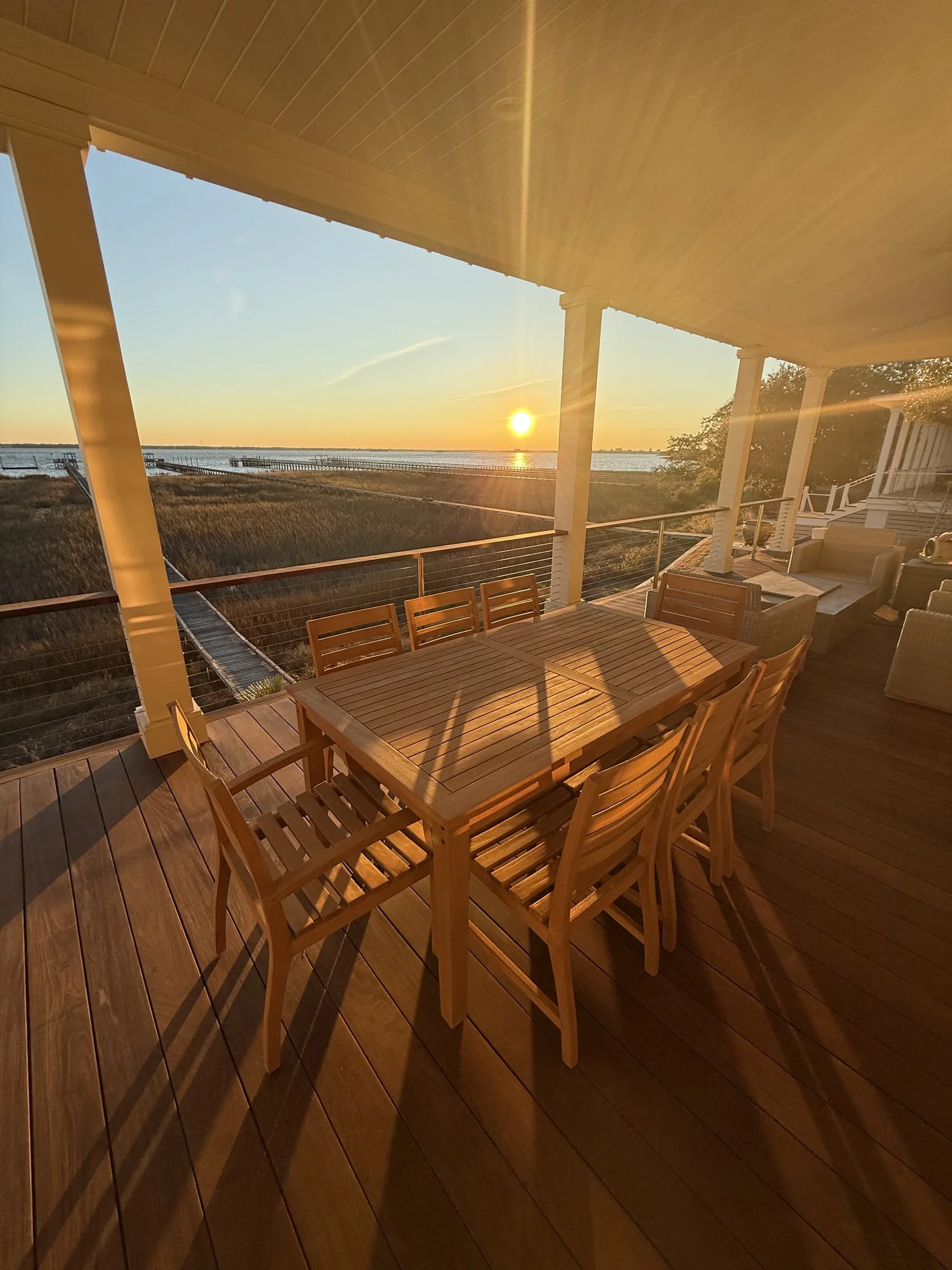
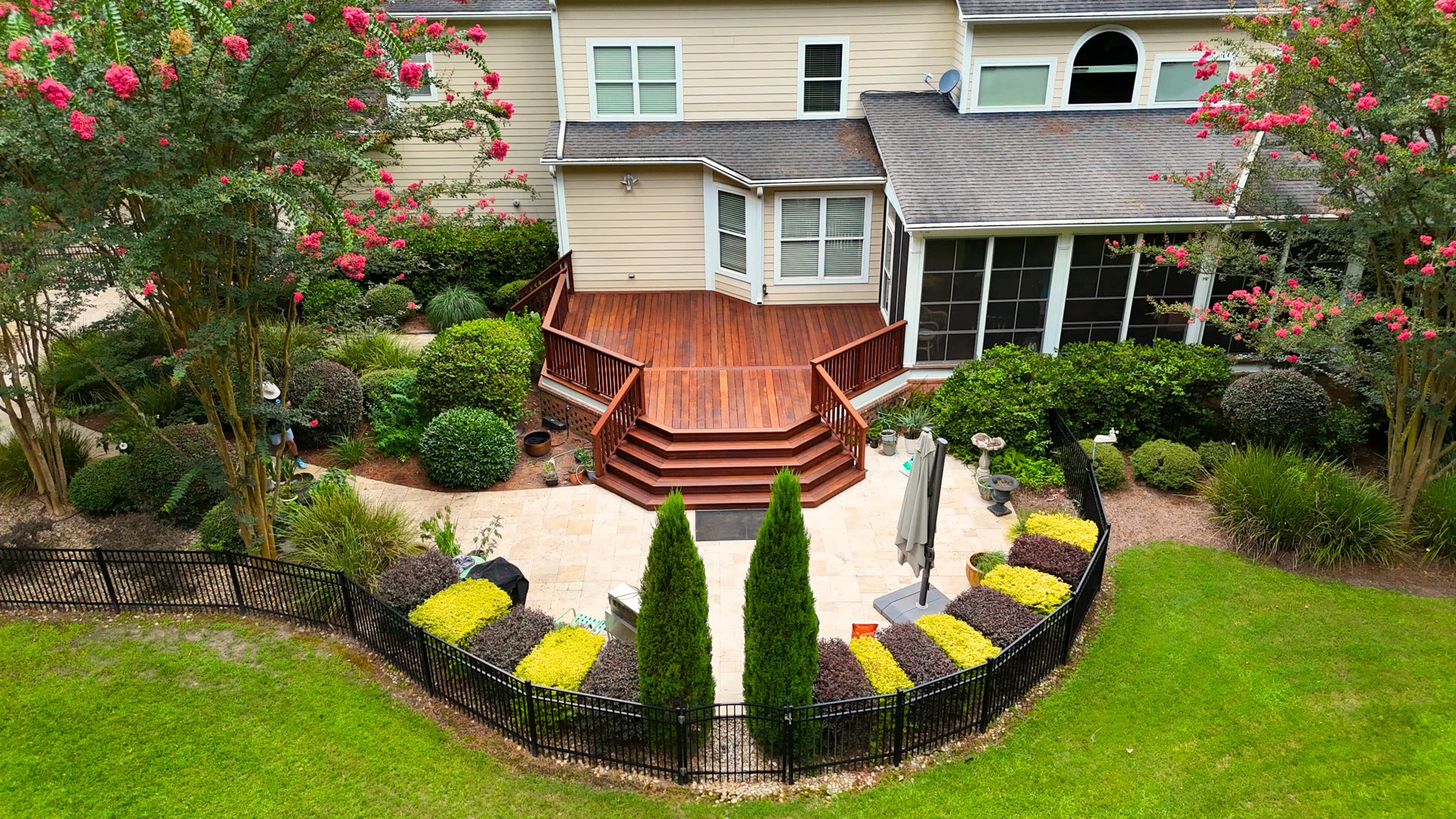
Charleston's finest homes are shaped as much by their gracious porches, sunlit decks, and marsh-view docks as by historic brick or sweeping live oak. For generations, these outdoor spaces have defined the Lowcountry lifestyle. But the same coastal environment that makes them so appealing also takes a relentless toll on wood.
1. Fading and Discoloration
UV exposure is the number one cause of deck deterioration in Charleston. If your once-rich stain has turned gray, blotchy, or uneven, the finish has broken down and is no longer protecting the wood. Left untreated, UV damage leads to cracking and grain separation.
2. Peeling or Flaking Finish
When stain or paint starts peeling, it means moisture has gotten underneath the finish. In Charleston's humidity, this can happen faster than in drier climates. Peeling finish exposes bare wood to water, mold, and further UV damage.
3. Splintering or Rough Surfaces
Walking barefoot on your deck should be comfortable, not hazardous. Splintering indicates the wood grain has lifted due to moisture cycling — absorbing water and drying out repeatedly without adequate protection.
4. Soft Spots or Structural Concerns
Press firmly on various boards across your deck. If any feel soft or spongy, that's an indication of rot. Soft spots near posts, stairs, or ledger boards are particularly concerning and should be addressed immediately.
5. Mold, Mildew, or Dark Staining
Green or black discoloration — especially in shaded areas or between boards — signals mold or mildew growth. Charleston's humidity makes this almost inevitable on unprotected wood. While surface mold can be cleaned, recurring growth means the finish isn't providing adequate moisture protection.
If you notice any of these signs, don't wait. Early intervention through professional restoration is significantly less expensive than the structural repairs or full replacement that deferred maintenance eventually requires.